
Paper for the SAMLA 2025 Annual Conference, Atlanta, November 7, 2025
Panel: Through the Magic Door: Home Life in the Anthropocene
Abstract:
Spanish Caribbean speculative fiction that embraces the rich oral traditions, folklore, and magical realism the region is traditionally known is not «new.» Case in point: Erick Mota.
After the Fall of the Berlin Wall (1989) and the collapse of the Cuban economy (1990-97), Cuban science fiction writers started to produce stories where their acute awareness of the impact of climate change was mixed with a shared fatalism regarding the future of the nation -political or geographical- within the new neoliberal world order. To achieve it, they embrace cyberpunk. Erick Mota’s writing emerged during those years: the singular twist on his tales of hackers, IAs, extreme social inequalities, and dysfunctional state was to add the Afro-Cuban legacy of mythical creatures and ethical perspectives.
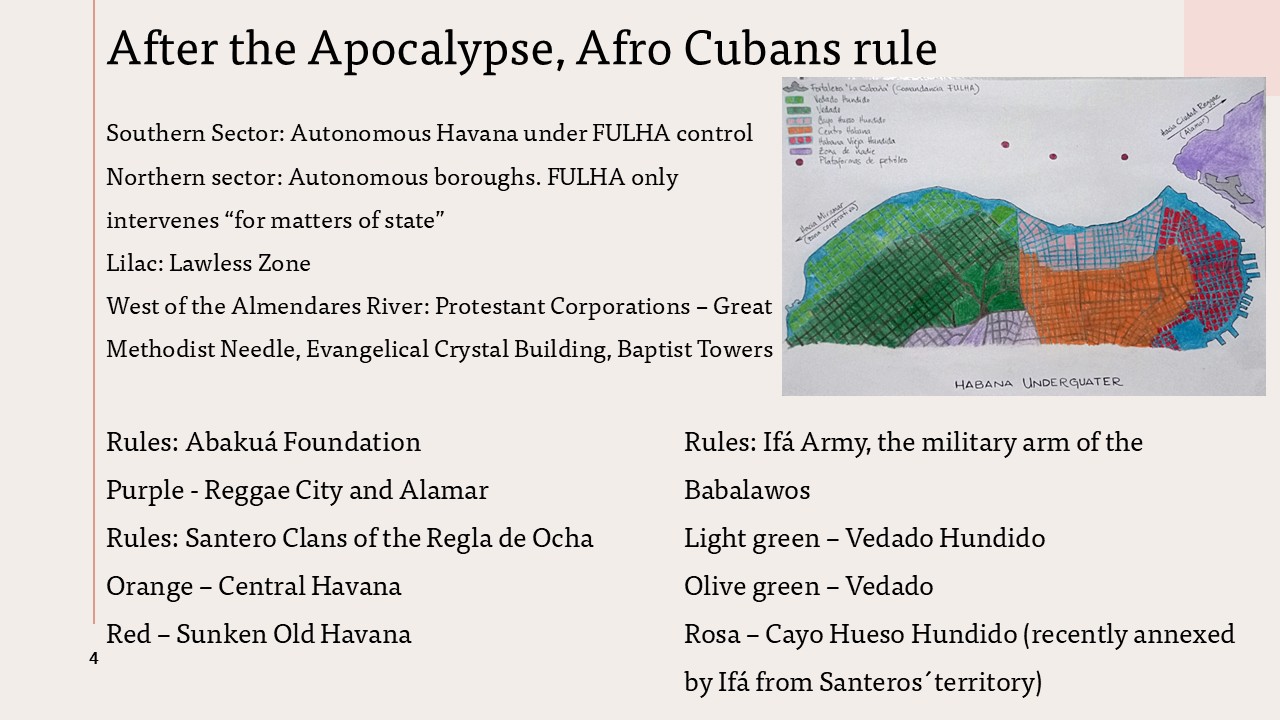
The enthralling Mota’s plots and characters reflect the ongoing negotiation of Cuban national identity at the dawn of the twenty-first century to a world that feels like a post-apocalyptic future. This integration of Afro-Cuban mythology also challenges traditional Western narratives: He never justifies the choice and instead presents a universe where diverse ontologies and knowledge systems coexist. It is a liberating and subversive political project, but still full of conflicts.
This paper examines Mota’s Habana Undergüater universe (the novel and short stories) along with his essay production to define the type of cultural knowledge he produces to address the country’s long history of slavery, colonialism, postcolonialism, and racism and engage with the collective trauma of the 1990 Socialism collapse for the Cuban idea of nationhood and collective future.
Bonus: Erick J. Mota Pérez, Habana Undergüater, Indómita Luz Editorial, Buenos Aires, 2024 en PDF
 Bitácora de viaje